Tag

#UndressingDisability

Christmas and loneliness: how you can help someone feel less alone

By Disability, Sex & disability, Undressing Disability

Christmas can be a wonderful time of year but it can also be a really lonely one. Many disabled and neurodivergent people are more likely to struggle with loneliness – especially at a time of year that is renowned for family, friends, parties and social events. A lack of an emotional connection or people around at this time of year can make people feel depressed or anxious.

We conducted a survey in November 2021 which revealed that 47% of disabled people felt lonely frequently with 12% feeling lonely all the time. We need to recognise when people might be struggling or recognise the signs in ourselves.

Access our survey results by clicking here

It can be difficult to reach out to ask for help and our survey discovered just 20% had spoken to a professional about the impact their loneliness was having on them. However, 48% had reached out to family or friends to talk which is more positive.

In the survey, we asked people what they thought might help with 45% of disabled people reporting a hug or personal contact would be great. A further 38% suggested one-to-one time with friends also helped. Some thought that connecting with others in the disability community may help.

How can I help?

Reach out

We’ve all been there when things get busy at Christmas – not having enough mental or physical space to go for a coffee or drink with someone. It’s hard to stay in touch with people, especially during the festive season. If you haven’t seen someone in a while – why not text or call them?

Be there
Asking how someone is and taking the time to really listen is appreciated. Putting your phone down and asking questions means someone is more likely to open up. Don’t put pressure on someone to tell you what they are feeling if they can’t or don’t want to. Alternatively, make it clear that you are there for them if they want to talk or gently let them know you have concerns.

Set up an anti- loneliness Christmas event
Setting up group activities either online or offline can also help people to feel included. It might be fun to organise an online pub quiz or watch a film with someone as a way of staying connected. If someone is struggling, they may appreciate an activity which can get their mind off things.

Talk to other mates
Telling another friend of your concerns can be very helpful. A team approach to making sure someone isn’t feeling down or alone means there is less stress on one person.

Care for carers
It can be really hard to look after someone who isn’t well. The end of the year can be exhausting for everyone especially if you are providing care for a loved one or family member who isn’t well. Taking the time to reach out, ask how they are, take them for a coffee or offer to listen if they need it. Could you organise something fun for them or bring them a present to cheer them up?

Offer to decorate
Many disabled or chronically ill people may not feel well enough to decorate their homes. Can you offer to pop over and help them put up some decorations or take them down when they need to?

Invite someone for Christmas
Are you in a position to have someone over for Christmas? People can be on their own for multiple of reasons and may not feel comfortable asking to join your family for the day. If you suspect someone might be on their own – why not offer a seat at the table for dinner or offer to pop over afterwards?

If there are a group of you that are without a place to go for Christmas – why not organise a day together? You can split the responsibilities and the cost between you and it means that no one is on their own. It can also mean you discover a new Christmas tradition!

Click here to read more about loneliness and disability 

New Year’s Eve and loneliness

New Year’s Eve is another time when people may struggle as they don’t have family or friends around. Some may not feel up to going to crowded bars or may worry that pub or club is not accessible. Could you potentially hold a drinks evening or film night that evening at your house instead? Or offer to go to theirs armed with a cheeky prosecco and party poppers?

Check if a pub/nightclub is accessible
New Year is one of the biggest nights out of the year but it can be difficult to navigate for disabled people. If you are organising drinks or a night out, check ahead of time that the pub or club that you choose is accessible for people.

Not sure how to choose somewhere to go? Ask don’t assume someone’s access requirements and that will help you narrow down a few spots. It could be that someone needs a quieter pub because they are neurodivergent and may struggle with crowds or if someone is a wheelchair user then they may need step-free access.

Download our free resource on how to choose an accessible venue

If you are struggling with loneliness or just need a chat: here are some helplines or websites that may help you

Contact
Mind –  0300 123 3393 / info@mind.org.uk
Samaritans – 116 123 / jo@samaritans.org
Calm – 0800 58 58 58 /
Childline (under 19) – 0800 1111

Websites
Age UK
Marmalade Trust
WaveLength
Samaritans 

Love Lounge

Neurodiversity and Abuse

By Sex & disability, Undressing Disability

There are many forms of physical, emotional and sexual abuse and it can be really hard to spot when this is creating a problem in your relationship. 

While anyone can be a victim of abuse, research shows that those who are neurodiverse may have a heightened risk of violence, bullying or controlling behaviour. ADHD, Autism, Dyspraxia, Dyslexia, Dyscalculia, Dysgraphia, and Tourette’s syndrome are all examples of neurodiversity. It is believed that 15 to 20 percent of people are neurodivergent. 

Studies show that autistic people may be up to three times as likely as their neurotypical counterparts to experience bullying, and physical or sexual abuse. 

As an ADHD adult, I struggle with impulsivity, inattentiveness and hyperactivity among other traits. My relationships can be impacted by these which can make it difficult for me to form healthy connections with others but not impossible. However, one area that I need to be extra aware of is physical or emotional abuse. 


Here are three ways in which physical, emotional or sexual abuse within a relationship may be difficult for neurodiverse people to identify

1 – Dopamine seeking

When it comes to ADHD, we have lower levels of dopamine in our brains than neurotypical people. Dopamine is a hormone that controls many areas including memory and pleasure. When I form a new relationship, I crave the mental stimulation that I get from a new person. 

This, in the past, has made it very difficult to walk away from a relationship and risk losing that dopamine supply. It means that my brain can often gloss over the bad stuff to get to the good bits even if there are very few of them. 

Red flags at the start of a relationship can reveal a lot about what is to come. If you are getting serious warnings at the beginning then it can be really dangerous if your brain doesn’t allow you to stop, process or leave. Abusers are often clever and can spot this. They may take your lack of acknowledgement as acceptance and may keep pushing the boundaries on what they can get away with. 

Dopamine seeking can also mean that we do not recognise red flags in sexual situations either. It can be difficult to recognise dangerous situations, stop or ask yourself if you truly consent. We may also say yes in order to for fear of losing the person we get this stimulation from.


2 – Gaslighting

Gaslighting is when a person tries to get you to question their reality, memory or perceptions. It may be difficult for neurodivergent people to recognise when someone might be trying to change details, memories or events to control them. 

The reason for this may be that neurodivergent people can struggle with low self-esteem and be extra vulnerable as a result. We can often hear negative messages about ourselves while growing up which can have a last effect on our confidence levels as an adult. 

The immediate start of gaslighting in a relationship may feel more like hyper-acceptance from a partner which can become control over time. I struggle with my memory as a result of my ADHD, thanks to the lower dopamine levels, so it’s easy for me to forget details. Partners could easily use this to change small details without my noticing. The memory issues are mostly harmless, although annoying when I lose my keys, but they can be dangerous if a person is repeatedly changing the narrative in their favour. 

As a neurodivergent person, I tend to overshare which can also provide a lot of information for people about me. While most partners take this as a way to get to know me, albeit, in a short space of time, some may store the information for use at another time. This is where the devil can use the details you have told them, and then forgotten you’ve told them, to make gaslighting seem even more real.


3 – intense connections

Abusers can be incredibly manipulative and able to exploit a vulnerability. One of the ways this can manifest is through love bombing. 

Love bombing can be excessive attention, admiration, and affection from someone often at the start of a relationship. If we, as neurodivergent people, have lower self-esteem and confidence, this can masquerade as acceptance.

It can be difficult to leave if you believe that this is the only person who accepts you or is affectionate towards you. Often abusers can separate a person from friends or family through gaslighting or other methods so you may feel the connection more intensely because they are the only person you feel understands. 

As an ADHD person, I struggle to form boundaries with people where I can recognise where I need to safeguard myself. I have very intense friendships and relationships as a result. The intensity of the connection, lack of boundaries, pleasure and reward-seeking mean it is very difficult to walk away.

When it comes to sexual abuse, we can often mistake intensity for acceptance. Neurodivergent people can be too trusting and struggle to read a situation or social cues. This can place us in difficult situations or around dangerous people with no idea how to get out. To be accepted, we may find ourselves saying yes to things we don’t understand or want to take part in.


How to get help

Research 

Record

Communicate


Research:

It can be very helpful to know how your traits, like the ones above, can make it difficult for you to spot the signs of abuse. This means doing a bit of research around neurodiversity or even what to look for when it comes to emotional or physical abuse. 


Record:

No matter how difficult it might be, recording your experiences can be a big help. Make a note of something that doesn’t sound right to you and add to the list if you need to. If you can see a pattern start to emerge then you can address it. Writing everything down can help things to seem clearer, less overwhelming and help you to feel in control.

Also, if the situation needs to escalate, it can be very helpful to have a clear timeline or a list of things in case you forget.


Communicate:

Open up to someone you trust who is not connected to that person. This could be a friend or it could be a someone at an organisation who has training in this area. 


You are not alone and here are some organisations that may be able to help:

National Male Survivor Helpline and Online Support Service.
A dedicated service for anyone who identifies as male affected by sexual violence, and those who support them. You can contact them via Phone: 0808 800 5005 or Email: support@safeline.org.uk


Refuge.
For women who have experienced domestic violence. Refuge operate a freephone, 24-hour National Domestic Abuse Helpline. To use this service please call: 0808 2000 247


The Survivors Trust.
This is a free helpline open 7 days a week for people over the age of 16 who have experienced sexual violence or support someone who has. To contact them call: 0808 801 0818 


Rape Crisis.
Anyone over the age of 16 who has experienced sexual violence can contact rape crisis for advice and support by calling 0808 802 9999 or going online via https://rapecrisis.org.uk/get-help/ 

Spinal cord injuries, intimacy, and sex

By Sex & disability, Undressing Disability

The support around spinal cord injuries (SCI) and sex isn’t great, and often isn’t even provided. Sex and intimacy are a huge part of a person’s life and will be impacted by this type of injury.

We spoke with Ian Hosking about his injury in the hopes that hearing advice from someone else in a similar situation may provide you with some support.


Meet Ian

Ian is a 52 year old man who currently lives in Wendover, Buckinghamshire with his wife, son, step-son & step-daughter .

At 34 years old, Ian and his then wife were in a car accident, leaving them both with spinal cord injuries, and Ian became tetraplegic paralysed from the chest down. Changing his life for ever.

Of course, this wasn’t easy for Ian to adjust to initially, however it didn’t stop Ian enjoying the activities he enjoyed. Amongst other things, Ian has a love for Wheelchair rugby, he played for 16 years and is now the chairman & player with Stoke Mandeville Maulers wheelchair rugby team.

Another of Ian’s passions is helping others with a SCI to regain confidence and navigate a new and unexpected journey. He has done a lot of work with the Spinal Injury Associations which includes delivering talks to organisations and groups.

Eighteen years on Ian has created a new life for himself and offers some great advice that could be useful to hear.


dimmed lighting, laptop on in the background with a heard shaped ornament on too and a candleOnline dating

Adjusting to an injury of this extend is difficult, and every situation is different. It caused a huge strain on Ian’s first marriage, resulting in separation for the pair.  After this, Ian tried online dating where he met his current wife 10 years ago. We wanted to get Ian’s opinion on when and how to tell your matches about a SCI.

Firstly, don’t feel pressure to advertise being a wheelchair user in your bio but also don’t hide it. After all your injury isn’t who you are, just a part of it. With a SCI, it isn’t always easy for someone to notice, especially if the pictures you are using are of you sitting down or from a certain angle.

However, as Ian suggests, it’s probably not a good idea for you not to hide it either. Ian would often talk about playing wheelchair rugby, which is a pretty good indicator. If someone stops speaking to you after this, then they likely weren’t the right person you would want in your life anyway!

We have a Love Lounge question answer more about disclosing disability when online dating that you might find useful.


Taking time to adjust

After the car accident, all Ian remembers is waking up in the hospital with his hands not working fully and with out being able to feel three quarters of his body. Now he has learned to use the function in his hands as best he can and is paralysed from the chest down.

One of the things Ian had to adjust to were leg spasms. With a SCI, the muscles are no longer responding to brain signals. Therefore, involuntary spasms can occur. This can be frustrating, you can take medication to reduce it but there is no way to stop them happening. Ian decided not the take ant medication and to just cope with the spasms.

Another adjustment is the loss of control over bladder and bowels. Accidents can occur, which obviously is not a pleasant experience. Ian says he was lucky as before his incident he didn’t have any issues with his bladder and bowels, therefore making it slightly easier to pre-plan his bathroom visits. However, this is not the case for everybody and will take a varying amount of time to adjust to these changes.


Ian’s advice

The number 1 thing is to be patient with yourself. You are relearning your body, and this takes time. You may find you now have different values and purpose. There is no ‘right way’ to adjust, so take time and learn what works for you. In time you will have new ‘normal’ routine, which many people establish through rehabilitation and support from family and friends. Which takes us on to having patience with your loved ones, communication is key.

Yes it is your body, but it will also impact the lives of those you are close with. Having an understanding to how others may react will go a long way. The people in your life will want to help, and any conflict or frustration can most likely be solved through an open and honest conversation.

Another piece of advice would be to stop trying to avoid problems and try solving them instead. What could a potential solution to your issue be? And if that doesn’t work then maybe something else will.


Intimacy Blurred image of someone lying on a bed. There are scrabble tiles in focus reading sex

Ian says the need for communication and honest conversations after a SCI made sex more intimate. The first step should always be honesty with your partner. This will also help relieve any nerves – which are completely normal for someone to experience around intimacy after an injury.

Planning your sex can be beneficial so you can make sure you have been to the bathroom beforehand and prepared yourself mentally if necessary.

One thing to consider and talk about with your partner is positions. This will depend on the level of injury as everyone will have different capabilities.

There are various medications that can taken which allows a male to become hard. Each with different strengths and side effects. For example, some medications will remain in the body for longer, which as Ian pointed out, is not ideal when it’s the next day and you’re trying to get about your daily life. It might take some trial and error to find what works for you.


Focusing on the positives

It goes without saying that adjusting to a SCI will be challenging, but Ian was determined to not let this change him from a happy and positive person.Ian and Lenny at his concert

He even laughed about how it can actually have many benefits. Like him and his wife getting priority seats to a past Lenny Kravitz concert resulting in being in the right place when Lenny did a walk around. Lenny then stopping and giving Ian a hug and kissing him on the head!

Ian also gives advice about the positives it can bring to a relationship, specifically being less selfish in the bedroom department. I’m sure many women (and men) can relate to sex sometimes feeling a bit…underwhelming. However, Ian says that his SCI made him more aware of what his partner wanted and liked. Pleasing them became more of a priority as the focus was taken off pleasuring himself.


Resources

If you have any questions about Spinal Cord Injuries and intimacy, write in to our Love Lounge where we will offer some practical advice to your problem

We also had Dr Mitchell Tepper on our Undressing Disability Podcast, who is a sex educator and coach who specialises in Spinal Cord Injuries.


Combatting Loneliness – Helpful Links

By Undressing Disability

If you’re following our Disability and Loneliness campaign, you’ll have seen our survey results which highlighted that:

  • 47% of those surveyed said they felt lonely frequently
  • 12% stated they always experienced loneliness
  • Only 20% had spoken with their GP, caregiver or therapist in relation to the impact loneliness was having on their wellbeing
  •  48% turning to friends and family for support.
  •  9.7% feel they had no-one to help and 41% replied ‘Maybe’ when asked if they had a support network to turn to
  • 38% believed that disabled people are the group that loneliness impacts the most
  • 32% believing that it was the over 50’s demographic most likely to feel lonely

Throughout our campaign we will add useful links and resources to this page. In the meantime follow the hashtag #DisabilityAndLoneliness and visit the links below.

The Love Lounge

If you’re feeling lonely following a relationship breakdown or would like to start dating but are worried about rejection or disclosing your disability read the articles below. You can also write into our Love Lounge for advice from our resident sexperts.

Disability, Sex, Virginity and Safety 

Finding the Confidence to Date Again

Dating and Living with Friedreich’s Ataxia 

Why do attraction sparks never go anywhere for me?

How to Become a More Confident Dater

Rejection, Dating and Disclosing Disability

Professional Support and Helplines

You might also find it helpful to visit the following websites or to call their helpline if you need someone to talk to. Please don’t struggle alone, there is help available and it’s always good to talk.

CALM – Campaign Against Living Miserably

MIND – The Mental Health Charity 

SAMARITANS 

WAVELENGTH – Fighting Loneliness

MARMALADE TRUST – Loneliness Charity 

UNDRESSING DISABILITY HUB – our free hub is a network for anyone interested in, or working in the field of sex and disability. Searching through the members there will highlight counsellors and therapists should you want to find professional help.

Stay Connected

Follow #DisabilityAndLoneliness hashtag and join the discussion around our campaign on twitter @ETUKUndressing and on Instagram @UndressingDisability.

How Stress Impacts Your Libido and General Health

By Disability, Undressing Disability

This article is about how stress impacts your libido and general health.

What is stress?

When we’re feeling stressed, our body has a physical reaction which triggers the release of cortisol and adrenalin. These stress hormones send us into what is known as ‘fight or flight’ mode. Instead of being relaxed we are on edge, worried or overwhelmed. Everyone has different things that trigger stress but for the majority of people stress impacts your libido, your mental health, and your physical wellbeing.

Physical Symptoms of Stress

Stress is exhausting and lowers our tolerance for many things. Some symptoms of stress are:
• Sweaty palms
• Foggy mind and/or irrational thinking
• Irritability and/or low mood
• Rapid heartbeat
• Shallow breathing
• Insomnia

When stressed, we just don’t have the capacity to be thinking about others, only focussing on ourselves. A lack of tolerance for others, irrational thinking and even aggression can impact our relationships by pushing your partner away. In turn, the lack of closeness can lead to more worry about your relationship and perhaps lead to low self-esteem.

Stress and Libido

Stress can affect both men’s and women’s libido. The stress hormone cortisol disrupts your testosterone levels, which is responsible for men and women’s sex drives. It can also:

• Narrow your arteries, meaning men may experience erectile dysfunction
• Take you longer to become aroused and reach orgasm

When you’re stressed and have worries and thoughts running through your head it’s not surprising that your libido might decrease.
If stress is impacting your libido, trust that this can change. It doesn’t mean your sex drive will be low forever. It can fluctuate at any time and for many reasons. Intimacy may help reduce your stress too. So kisses, a loving cuddle or massage can alleviate your tension and stress. And with time, this may help your libido increase.
Masturbation can be a big stress reliever too, so it’s not just a partner that can make you feel good!

What can we do to manage stress?

When you feel stressed and are aware of the physiological changes, try and take control back by refocusing your thoughts. Ask yourself:

1. What is really going on in this moment?
2. How can I reasonably respond to the situation?

This isn’t easy and will take much practice to regain control of your thoughts.

Here are some tips:
• Slow down your breathing and breathe through your nose, deep into your belly, expanding your diaphragm. Release the breath slowly and forcefully, emptying the lungs.
• You can use mindfulness with your breathing too. Notice the air flowing through your nostrils and how your chest and belly rises. How does it feel? This exercise of thought focus will divert the panic response of fight or flight.

Managing relationships whilst stressed

If you recognise that you’re being snappy and impatient with your loved ones, don’t be too proud to admit it’s happening.
When you’ve got time to collect your thoughts, be honest with them. Say

‘I’m stressed at the moment and know I’m being irritable. Bear with me’.

This will help dissipate their bad feelings towards you, rather than you not admitting it, feeling guilty yet still displaying the unhelpful behaviours! Also just being open and chatting the problem over with them may help you. The old adage ‘a problem shared is a problem halved’ is so true.
• Always remember – talk, reach out, use techniques, seek support! It’s out there.
• Speak to your doctor if stress is impacting your day to day life.

Useful Resources

The Stress Management Society – 30 Day Challenge

Mental Health Foundation – How to Manage Stress

NHS – 10 Stress Busters


Keep up to date with all our Undressing Disability chat by joining us on twitter @ETUKUndressing or on Instagram @UndressingDisability.

Cervical Screening and Deaf Awareness

By Disability, Undressing Disability

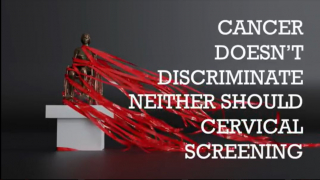
Cervical screening saves lives and its so important that women have regular check-ups. So why did a survey by Jo’s Cervical Cancer Trust highlight that 88% of disabled women found accessing a smear test more difficult because of their impairment? Claire, our Deputy CEO shares her experience of cervical screening as a deaf woman.

6 Monthly Check Ups

A few years ago, I had to go for cervical screening tests every 6 months. It definitely wasn’t my favourite way to pass the time, but I know first-hand how essential it is. You see a smear test showed that I had moderate to severe abnormal cells caused by the HPV virus. Luckily for me it was picked up and I had laser therapy to destroy the abnormal cells. Now that’s resolved I go for a smear test every 3 years and hope for a positive experience. Unfortunately, a lack of deaf awareness frequently creates problems. As a result, I battle with feelings of anxiety before, during and after the test takes place. And I’m not alone. A study by Jo’s Cervical Cancer Trust found that 88% of disabled women found cervical screening tests difficult because of their impairments. Something needs to change!

My First Smear Test

The first time I had a smear test I didn’t really understand what was going on. I’m sure that’s common for many women but when you’re deaf there’s extra things to feel anxious about. For example, at my doctor’s surgery the examination room is right next to the busy waiting room. Before my smear test the nurse left the room for me to get undressed. She said she’d knock to make sure I was behind the cubicle curtain before coming back in. As I can’t hear the knock on the door, I felt panicked that I’d be exposed.

I explained that I was deaf, but unfortunately the nurse didn’t adapt her behaviour to ensure I was properly briefed. When preparing for the test she kept turning her head away to organise the equipment. This made it impossible to lipread, so I lay there with my anxiety growing by the second.

Once my knees were up and a sheet covering me, I couldn’t see what was about to happen. I knew she was talking to me, but I couldn’t hear what she was saying. I said “I can’t hear you” and instead of moving her head so I could lipread, she just stopped talking.

When she inserted the speculum there was no warning, so I tensed my body, and it was really painful. (I’m told by hearing friends that the nurse tells you when it’s about to be inserted and whilst it may be uncomfortable it usually doesn’t hurt.)

I also left the test with no idea of when to expect the results and went home upset and worried.

Deaf Awareness

My next experience of cervical screening was much more positive. The nurse told me her cousin was deaf, so she had great deaf awareness. Here’s what she did to make the smear test a much easier experience for me.

1. She explained the procedure from start to finish before asking me to get ready and lie on the bed.
2. Whilst explaining she maintained eye contact, used gestures, and demonstrated with the speculum what would happen. When I didn’t understand one part, she got a pen and paper and wrote it down.
3. When leaving the room for me to get undressed she said she’d be back in 5 minutes, rather than saying ‘she’d knock’. I looked at the time on my phone, got ready and waited.
4. We agreed that she would tap my leg as a sign that she was about to insert the speculum, giving me a moment to relax and prepare.
5. She understood that I was very anxious because of my previous experience and reassured me.

Make Appointments, Not Assumptions

If you are deaf and have never had a smear test, then please don’t be put off by my initial experience. Cervical Screening saves lives. My aim of sharing such a personal insight is that it will help bring about change, and help the disabled community have equal access to the services others access easily.

For medical professionals reading this hopefully my tips will be useful and improve deaf awareness within your surgery or clinic. Find more insight on our campaign page. 
#CervicalScreeningRedTape

Follow Our Campaign

Read more about our #CervicalScreeningRedTape campaign and follow us on twitter @ETUKUndressing and Instagram @UndressingDisability.


Worried about Cervical Screening?

Visit the Jo’s Cervical Cancer Trust website where you’ll find lots of practical information, advice and a forum where you can pose questions and share experiences.

Virtual Speed Dating – Undressing Disability Events

By Disability, Undressing Disability

Date In A Dash has teamed up with Enhance the UK to host some amazing Undressing Disability virtual events. Join us for an evening of fast, fun & flirty speed dating from the comfort of your own home. Disabled and non-disabled people are welcome. Our aim is to create an accessible event for everyone to enjoy.

Our next event is on the 25th November. This is a lesbian event aged for 25-45 year olds, age not strict but necessary,

Date: 25th November

You can expect to meet around 15-20 people throughout the virtual evening event which will take place on Zoom.

Registration

  • Please ensure you arrive 15 minutes before the scheduled start time to allow for registration.
  • Speed Dating kicks off at 8pm prompt.
  • Any guests arriving late may not be able to take part.

On arrival one of our friendly hosts will be waiting to register you.

When everyone has arrived the host will explain how the evening will unfold and the lucky chosen ones will be placed in your virtual date rooms for the duration of the event , with people visiting you throughout.

Make it Speedy!

The dates will last for 3 -4 minutes each (dependant on numbers)  the hosts will manage who goes where so no need to worry here.

Single Pringle Ready to Mingle

At the end of the event there will be a chance to mingle with everyone in a group networking session. So don’t worry if you forgot an infamous chat up line you can still test it out after the dates.

If you find the love of your life or maybe a few you’d like to meet again please make a note of their name. You can email the host at the end of the session to be linked up afterwards.

The event will aim to finish at around 9:30pm.

Tickets and Questions

Please be aware that tickets for our events are very limited and the majority do get booked up in advance. Please book early to avoid disappointment.

Tickets costs £5.98 and can be booked via this Eventbrite link.

If you have any queries or would like to discuss your access requirements please contact us.

Stay up to date with all our virtual events and news by joining us on Twitter @ETUKUndressing and Instagram @UndressingDisability #UndressingDisability #UDEvents

Discover more about Date In A Dash by visiting their website.

The Love Abilities Virtual Sexuality and Disability Festival

By Undressing Disability

Empowerment

We at Enhance the UK are super excited by the upcoming Love Abilities Festival.  The festival aims to change the belief that disabled people have no desire for love, sex, and intimacy. It aims to empower disabled people with the skills, knowledge and resources to lead the fullest lives possible. And for their caregivers, lovers and allies to help support or be part of their life.  This is a festival that’s right up our street!

Love Abilities

The Love Abilities Festival takes place over 5 days starting on the 15th of October.   There will be 29 sessions and 50 presenters spanning 6 countries.  There is something for everyone in the programme from ‘Sex, the Law, Disability Rights and Fun’ to a workshop on ‘The Art of Teasing’.  If you’ve signed up the sessions are available for 30 days after the event.

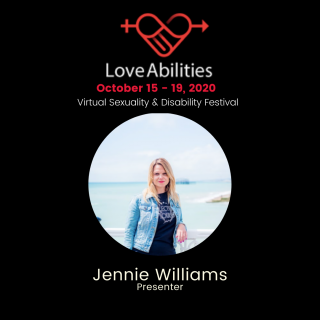
  Jennie Williams Presenter at Love Abilities Festival

Dating with Disabilities

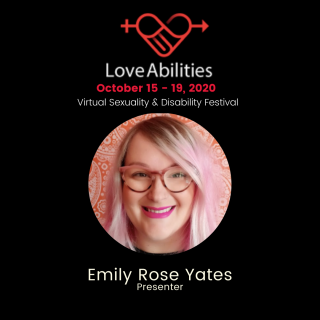
Jennie & Emily from our team will be on the ‘Dating with Disabilities’ panel alongside Dr Richard Bruno and Michelle Donald.

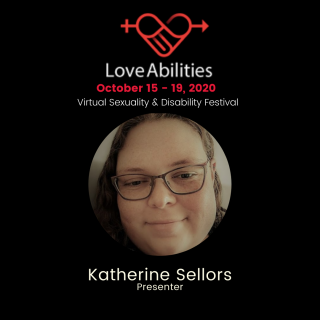
And our resident Love Lounge sexpert and occupational therapist Katherine Sellors is on the BDSM panel.

Love Abilities Festival panellist Kat Sellors

Tickets

You can get your tickets and find more information on https://loveabilities.org/ We hope to see you then!

Have you joined our Undressing Disability Hub yet? It’s a free online space where anyone with an interest in the topic of sex and disability can share knowledge, information, ideas and experiences. Sign up today.

Find us on twitter and Instagram, search hashtag #UndressingDisability.

Online Dating when Disabled: Is it worth it?

By The Love Lounge questions

Online dating when disabled. This is a very hot topic that we receive lots of questions about at the Love Lounge. We invited Ted Shiress, one of our sexperts, to share his thoughts, personal experience and advice.  Ted, who writes from a straight guy’s perspective, offers these pearls of wisdom.

Finding Love

I met my partner on a dating website. In the five or so years before that, I changed from thinking of myself as a complete romantic write-off to someone who knows what they’re doing. My experiences of it arguably buck the trend of most things I read by disabled daters. But the reality is for online dating to work, you’ve got to put some effort in! My practical tips and honest advice are shared below.

Introductions are Everything

Hi. How r u?

Hey. How’s it going?

Hello. What’s up?

Are you still reading? I hope so. Still, I can’t blame those who have clicked away. I have (at least on a non-ironic level) made no effort to arouse and sustain your interest. So it’s totally understandable if you’ve been distracted and turned to the flashiest thing on your screen. 

Introductions are everything. So get creative. Send imaginative messages, but also make sure that your profile sells you well.

Everyone’s Superficial!

“Everyone’s superficial!” I hear you cry. Well yes, there are lots of people who are superficial on dating sites. Why are you wasting your time with them? Ultimately, if your entire message is solely saying “Hi. how r u?” they probably think you’re superficial too! That’s probably the same message they got from other guys who were panting like a dog in heat at a flash of cleavage. Not the epitome of feeling wanted!

In my experience the average woman on a dating site isn’t short of messages. So, she’ll have little desire to give a seemingly unimaginative message any attention. Here, you have two options:

1) Only message matches you can see genuine common ground with

2) Or maybe slightly overplay the potential connection to spark a rapport 

Admittedly, the second is slightly shady, but sometimes potential takes time and exploration!


Perfecting Your Profile

I see people focus purely on their disability when writing their dating profile. I’m going to be harsh but honest here. If someone has little to no prior experience of disability, they might be thrown off-kilter. So, write interestingly and positively to counter that. Write about your interests: the places you’ve visited, books you’ve read, and music you love. Pull the reader in and get them hooked on what you have to say, rather than the equipment you might use to navigate the world. That’s perhaps a more intimate chat for later on.

Choose Your Dating Site Carefully

OK Cupid was my personal favourite dating site, and where I met my partner. This was because it gave me the most opportunity to go into detail and put myself across well. Honestly? It took a nudge from her housemate (Thanks Chrissie!) to get her to reply to my first message, but it worked!  In fact, it’s not a bad idea to ask friends to help you write your profile. Together, you might create the perfect dating pitch.

OK Cupid also had a good matching system, based on values rather than interests. An endless bank of questions you could answer gradually built up a kind of moral profile of who you were. It then matched you in % to potential partners. Obviously, it was a vague estimate but I often found the matches in the 90%s the most easy to talk to. I think my partner Astrid rocked in at 95% – see, my dear, stats don’t lie!

Is it Worth it?

So contrary to a lot of opinions, I say yes, online dating when disabled is worth it! Just don’t take it personally when you don’t get a reply. Your message is probably one of fifty!

Follow us on twitter @ETUKUndressing and on Instagram @UndressingDisability. #UndressingDisability #LoveLoungeUK

More articles about online dating as a disabled person:

Online Dating As A Disabled Person

Rejection, dating and disclosing disability

Disability And Intimacy – a musical tale.

By Disability, Sex & disability, The Love Lounge questions

Ted joins the Love Lounge team.

Ted recently joined our Love Lounge team and will be answering your questions in his own unique way. With his fair share of relationship ups and downs he’s got plenty of experience of dating as a disabled person. Ted promises to be straight talking and considerate in helping to solve your dating, relationship, and disability and intimacy dilemmas. The following article is

A Musical Tale

I thought I’d start with an analogy for disability and intimacy that I’m pretty sure only I could come up with. You see I’m a rather obsessive fan of the musician Neil Young, to the point my girlfriend refers to him as my boyfriend.  The few willing to indulge me in my musical obsession know there’s one ‘act’ I prefer: Neil Young & Crazy Horse. Yes, that’s right, they are to be referred to as one band. Neil and the three others will refer to themselves as ‘in the band Neil Young & Crazy Horse’. Two have become one – to quote a song I obviously have no time for.

Pure Magic

So I bet you guess I think they’re all wonderful musicians? Well, erm no. Neil just plays guitar in his very unique yet messy style, and the three others are very primitive to say the least. The bass-player seldom manages more than the route note of the chord whilst the drummer has a somewhat restricted range of tempos. And the rhythm guitarist appears to leave the main rhythm to Neil and then copy him when he’s off on a solo. That’s why Bob Dylan once asked Neil why he plays with those “f***in’ idiots”. Having said all that, when Neil gets with these guys it is pure magic. Something just clicks. I always love his guitar playing but it reaches a special grade of awesomeness when he’s with these guys.

Chemistry Counts

And frankly, that is what disability and intimacy is all about. Yeah technique and skill are great things, but when there’s a click and tonnes of chemistry these things seem superfluous. As a disabled person seeking to be intimate, or indeed a non-disabled person seeking to be intimate with a disabled person, you may occasionally ponder how the restricted movement won’t restrict the quality of the sex. However, as I remember every time I listen to my favourite group, if the chemistry is perfect between the two, the end-product will be too!

Can we help?

Got a question for Ted or our Love Lounge non expert sexperts? Get in touch.

Discover more about sex and disability with our free resources or buy our Undressing Disability e-book priced at £5.99. All proceeds go to our charity.

Join us on Instagram and twitter #UndressingDisability #LoveLoungeUK.

Top