Tag

Living with a disability

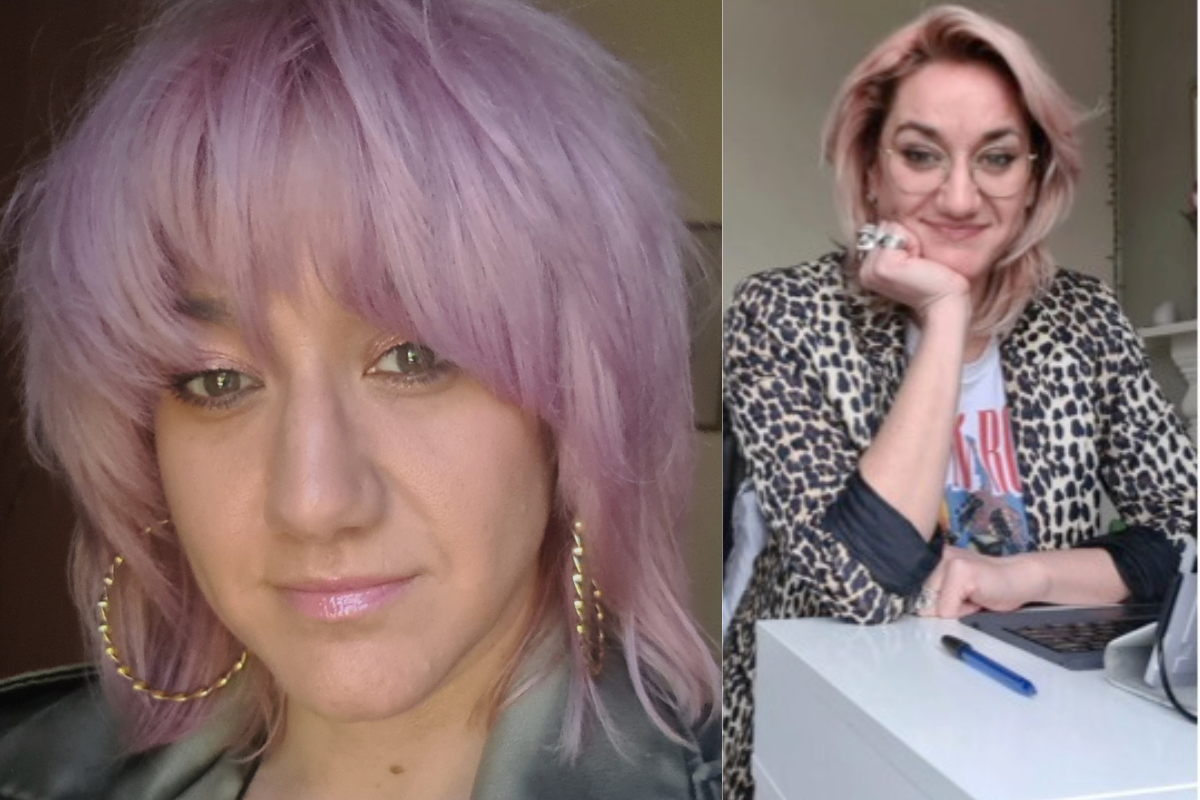
two images together A close-up portrait of a person with layered pastel purple hair and blunt bangs. They are wearing large gold hoop earrings and have soft pink makeup, including shimmery pink eyeshadow and glossy lipstick. The person is looking directly at the camera with a slight smile. The other photo is the same person in a leopard print blazer smiling at the camera and standing up

Amy Butterworth on….Long Covid, recovery and accepting vunerability

By Sex & disability, The Love Lounge questions, Undressing Disability

Amy Butterworth is a Long COVID activist, coach and talented writer. She is a powerful advocate for people living with Long Covid (LC), and her Instagram is a valuable source of inspiring tips and advice on managing the condition.

She shares what life was like for her before LC and what quick wins we can implement to support others.

What was life like for you pre-COVID?

I was managing a team at the Scouts, designing the programme of badges and activities, ensuring they were inclusive and accessible and preparing our young people for the changing world. I loved travelling the country and meeting groups to understand what they wanted from the programme, and how inclusive co-designing can create that.

Just before I got sick, I launched the Money Skills Activity Badge for Beavers and Cubs, which I was hugely proud of. I made sure we were co-designing with leaders and young people with different cultural, religious and neurodivergent backgrounds, specifically dyscalculia. Outside of work, I would set myself a physical challenge every year (triathlon, half marathon, boxing match), I loved going to gigs, theatre and comedy, and generally being the one you could call on to pick you up from the airport or watch your kids. 

When did you contract COVID, and what has it meant for you since then?

I got it in July 2021, and it changed everything. It was like a very exhausting flu, but after the cough went away and my sense of smell returned (ugh, that was the weirdest part), the fatigue persisted. I felt very weak, exhausted by walking, and my breath felt like hard work. My workplace was kind and patient, but I couldn’t return – I couldn’t guarantee that I could be a reliable colleague, so we had to terminate my contract.

I had to focus on my recovery and, after another year, I realised that this wasn’t recovery, it’s just how my body is now. That acceptance helped to change my attitude. I’m not ‘trying to get better’, I’m accepting this as my best, and let’s start here.

I started sharing my mindset and practical tips on Instagram in March 2024, as @longcovidrockstar, and it has really helped me make something of this experience. I’m still on the sofa 70% of the time, but now I feel a part of something, and that’s huge.

You can follow Amy at her Instagram page, LongCovidRockstar

What are some of the biggest misconceptions people have about Long Covid?

Many people just don’t understand it, and it speaks to a lot of systems that we have been living in: that fatigue is just laziness, and we’re not trying hard enough (capitalism), that it’s probably not as bad as you think (misogyny), or that we are choosing to live like this (ableism). We struggle with the concept of ‘chronic’ conditions because that narrative is ‘you get sick, then you get better’, but these illnesses are lifelong, and it can be scary to see people like me get disabled who were previously very healthy. We represent the fallibility and randomness of the body.

Long COVID has a few cousins (ME, MS, CFS, etc), and it is experienced differently by everyone. 200+ symptoms, 65 million people worldwide, it’s been hard to find a correlation in such a recent illness. Some people recover, others are bedbound, some push through, and everything in between. So that inconsistency makes it hard to understand and, honestly, develop sympathy for people with it. 

What has been the biggest adjustment for you?

Not knowing that I can always rely on my body. The humility that limited energy brings. I walk with a stick now. I use a wheelchair on outings. I can work for 2 hours a week. I cancel plans frequently because I don’t have the energy. I have learned how to give myself grace for all of these – I used to see them as failures, now they are simply how I live, no judgement. 

Learning to accept my vulnerability and ask for (and accept) help. I was so proud of my independence, and this has shown me how much I need my support network – and that it was there all along. There has been some profound heartbreak of some people not staying with me on this journey, and the overwhelming love and understanding I have received from my family and friends who have stuck by me has helped me adjust to this new way of living (and loving). I am very aware that not everyone has this – even just being believed is a really big thing for people with ‘invisible’ illnesses – and so I try to share the love where I can. 

Giving myself the grace to rest, the kindness and patience I speak to myself with now are very different. Like many others, I would assign my value to how much I could do/produce/achieve in each day, that ‘stress meant that I cared enough’, that burnout meant I had worked ‘hard enough’.

I’ve been reading a lot about activist history, and that Audre Lorde line is a foundational tenet now: “Caring for myself is not self-indulgence, it is self-preservation, and that is an act of political warfare.” Do not underestimate just how political it is to claim ownership over your own body, especially a female one, or a queer one, a trans one, or a disabled on, or a Black or Brown one – capitalism forces us to ignore our bodies, and when we rest we are protesting that. We put ourselves first, we deserve it, my one wild and precious life will not be focused entirely on punishing myself, my self, or my body, for your standards.

You are so open on social media about what your life is like with LC. Have you found community online, or how has it been to be so open?

I am very careful about what I choose to share and what I’m ready to talk about, and that will continue to change. I am lucky enough to be working with a great therapist, and through our conversations, I’m learning how to give language to what I’m going through, which I pass on to others in case it’s helpful. I’m also careful about not using social media to heal a wound – that is my job, not the function of likes, or seeking validation in the comments. Maddy Alexander-Grout says, ‘show the scar, not the wound’, so as I heal, I feel more ready to share. My background is in comedy, so it’s been really fun tapping into that and making sketches again (I speak to myself as ‘Ego’ and ‘Grace’ about different aspects of long covid, and they are surprisingly filthy and self-righteous, I really enjoy that). I think my honesty about how hard living with long covid is helps people feel seen, and my practical tips on how to ‘still’ do things help people feel empowered to do things, carefully. 

The community have been amazing, I’ve been so lucky in who continues to show up, and it feels like a very kind and powerful corner of the internet. They’re all on the sofa as well, and just as funny and creative and brave and mouthy and kind, but their frustration is how to ‘still’ be everything that they are, even with long covid. I’m trying to show them that this is still possible. For example, I am still a big rock music fan, but I can’t get out to gigs as much, so I’m on the sofa in leather trousers. 

What quick wins could people put in place to make things (could be workplace or social spaces) more accessible for people with LC?

The quick wins can be “imagine attending this event when you’ve not slept for 3 days, and you have a hangover, and you’ve broken your leg so you’re on crutches”. This will put you in the mind of someone’s exhaustion, nerves about events and their physical mobility:

  • Images/videos of the venue so they can imagine themselves there
  • Free companion ticket
  • Physically accessible space. If it isn’t, then acknowledge this, and ask what access needs might help (e.g. “our front door isn’t accessible for wheelchairs, but we can ensure you a seat in a prime location for the event” or something.)
  • Ask what time of day their energy is best suited to the meeting/conversation
  • Recognise that they will be resting before and after the event, sometimes for days, so if you need a follow-up, be prepared for that.

You can find Amy on her Instagram page at LongCovidRockstar
Disability and friendship: How do I open up to my friends about what life is really like for me?

By The Love Lounge questions, Undressing Disability

The question:

I’m in my mid 60’s and am having more and more health problems of late.  The last few years have been difficult. But what I find most problematic is my circle of friends not really understanding what life is like for me.

I laugh a lot with people, so they think I’m ok and they don’t seem to remember about the issues I have told them. They either act surprised when I mention things or scoff as though it’s not really that bad.

I feel really misunderstood and don’t know how to change it. It’s affecting my confidence when I go out with them. 

Ali 

The Answer:

Hi Ali,

This is hard when you don’t feel understood and then, as a result, feel unsupported by your friends. I remember having similar feelings years ago and my therapist telling me that it’s also my responsibility to tell people what’s really going on. It’s unfair for them to be expected to know how it really is for you when you haven’t communicated everything to them.

Perhaps because you’re jokey and smiley they don’t see the whole picture, and then when you say something that feels serious to you, it doesn’t land as it should perhaps because of the delivery. If you find it hard to hold the space and be serious in telling your story, perhaps choose one friend who you are closer to and ask to have a chat away from the group. Tell them what’s going on for you, health-wise but also that you find it hard to be taken seriously by the group. You could also ask them to be your spokesperson and tell the rest of the group for you.

Hopefully this will prompt them to acknowledge your feelings more and I’m sure they will come and support you once they know how you’ve been feeling. Another option, if you can’t verbalise it well, is to write to them (as a group or to your closest friend) and speak freely that way.

I’m sure they love and support you and are just missing your cues – then the more you lose confidence the harder it is for you to make yourself heard.

Communicate well, be honest and the love will come back to you!

Warmly,

Zoe

Love this? Read more Love Lounge questions by visiting our blog page.


Dee Smith on…..disability advocate work

By Sex & disability, Undressing Disability

Dee Smith on…..disability advocate work

At just 27 years old, disabled model and writer Dee Smith has modelled for London Fashion Week, featured in Cosmopolitan magazine, and launched her own podcast.

We spoke to her about how she’s combining creativity and disability advocacy to champion self-expression and inclusivity for disabled people.

Tell us more about your disability advocacy work. What is it all about and what made you want to start advocating in the first place?

I’m creative. All my advocacy work revolves around things I love and am passionate about, such as creating a photoshoot to model or writing a poetry piece. I went from able bodied to disabled and all of a sudden I noticed how ableist and inaccessible the world is because of toxic stereotypes that are NOT true. So I intended to change that through creative avenues.

You’ve modelled at London Fashion week and share images from many amazing photoshoots via your Instagram. What do you love most about modelling?


The freedom to be creative! I get to be anyone and do anything. I can be artistic, scary, beautiful, sexy, honest. The possibilities are endless! Plus, it inspires others and shows people what I and other disabled people can do. It educates.

How has your relationship with sex and desirability changed since becoming disabled?

It was a journey. I went from thinking I was undesirable and unwanted because of my disability and what society has told us. I had to learn to love my own body and embrace my sexuality again. Learning to love all of me, disability and all, has been a journey.

What is one myth or stereotype about disabled people that you would like to dispel?
That we aren’t sexy, beautiful, and desirable with needs.

What are your goals for the future? Do you have any dreams you hope to realise or upcoming projects you’d like people to know about?

My goals are to advocate more in bigger, more mainstream media where disabled advocacy can be heard and taught. Hopefully branching out into acting. I also have a podcast on Spotify called Training Wheels where I talk to all kinds of people, from all walks of life, and ask them to share their stories.

You can find out more about Dee and support her work via her Instagram @dee_smithxoxo and her podcast “Training Wheels” is available to listen on Spotify.

Sex and pleasure for disabled women in Nigeria

By Disability, Sex & disability, Undressing Disability

In this interview, sexual rights activist and researcher Susie Jolly interviews Ejiro Sharon Okotie, development professional in gender, social inclusion and disability rights. Ejiro shares her trailblazing advocacy work supporting disabled women in Nigeria with their pleasure and sexual expression, and why the need for societal recognition of their sexual rights is more important than ever before.

Susie: Tell us more about your research and advocacy work. What is it all about and what was the motivation behind this work in the first place?

Ejiro: In 2017-2018, while I was running training for disabled people in Nigeria on sexual and reproductive health and rights, one of the participants who had a Spinal Cord Injury shared, “After my accident, my biggest worry was if I still could have sex, less so my injury. However, I was too ashamed to ask the doctors and lived with that anguish for four months”. 

Another participant asked “At what point does masturbation become unhealthy?” Pleasurable activities like masturbation had been demonised and disabled people who engaged in it, were regarded as corrupt, bad, spoilt etc.

Meeting such project beneficiaries and hearing their stories made me realise how narrow our project had been and the huge gap that existed around the subject of sexuality and pleasure, especially as it related to disabled women. I realised this was a gap in the inclusive Sexual and Reproductive Health (SRH) project I had worked on (implemented through a collaboration between the Nigeria Association of the Blind (NAB) and the Journalists Against AIDS Nigeria (JAAIDS)). 

I became curious to delve deeper into this area of research, to understand if exploring sexuality and pleasure could contribute to the empowerment of disabled women in Nigeria. My advocacy seeks to enable healthy expression of sexuality and pleasure for disabled women, and societal recognition of the need for their ability to exercise their sexual rights.

Susie: What are you keen to highlight about the lived experience of disabled women in Nigeria?

Ejiro: Being a disabled woman myself, a common phrase I heard when I first began working in development was “disabled women get sex by chance and not by choice”. I want to highlight the fact that the narrative of disabled women only having negative experiences of sexuality such as rape, sexual abuse or assault is not the whole story. Disabled women also have positive, healthy romantic and sexual relationships and experiences, and possess agency in exercising their sexual rights. This was very evident in a documentary we produced as an offshoot from the research. 

Susie: How are you seeing prejudice and ableism affect disabled women in Nigeria when it comes to their sexual health and sexual expression?

Ejiro: In Nigeria, as in many other parts of the world, only a complete and functioning body is assumed to allow sexual expression or enjoyment of sexual rights and sexual health. The general perception is that disabled women do not, or should not, have sexual needs or desires, require sexual health information/services or even think about expressing their sexuality. 

These ideas typically come from the immediate families of these disabled women, and extend into society. This lack of recognition of the sexuality and sexual rights of disabled women continues to disempower them, and make them more vulnerable to sexual and gender-based violence (SGBV) and ill-health.

Susie: What changes would you like to see happen to better support disabled Nigerian women with their sexual health and sexual expression? 

Ejiro: A key change must be intentionality from parents, care-givers and broader society in Nigeria on effectively engaging disabled women on their sexual health, providing avenues for healthy conversations around their sexuality, supporting their efforts at a healthy expression of their sexuality and sexual rights, and providing safe spaces for disabled women to share positive experiences and support other disabled women who are survivors of SGBV or other violations of their sexual rights. 

We need a more responsive, sensitive, and proactive Nigerian population (families, community members, duty bearers) to foster an inclusive environment for disabled women as it relates to their sexual health and sexual rights.

Susie: Tell us more about the organisation you are running for disabled and youth.

Ejiro: The Hope Inspired Foundation for Women and Youth with disabilities (HIFWYD), is a woman-led organisation, founded on 27th February 2015, and registered as an Organisation of Persons with Disabilities in Nigeria. The Foundation was established to empower and amplify the voices of women and youth with disabilities, with a mission committed to promoting and protecting rights and inclusive development through advocacy, capacity-building, economic empowerment/livelihood support, and public engagement. 

HIFWYD envisions a society where everyone, regardless of disability or any circumstances, can realise their potential and live their dreams. HIFWYD has implemented several projects on entrepreneurship development for disabled women, as well as life-skills programs for disabled girls. 

More recently we have undertaken several projects to improve access to inclusive, comprehensive sexuality education, especially for disabled women/girls in rural communities, as well as building their capacities as self-advocates to realise their rights through better implementation of Disability laws in Nigeria. HIFWYD has been supported by several donor partners with the most recent being the Disability Rights Fund (DRF/DRAF) and World Connect.

About Ejiro

Ejiro Sharon Okotie, is a Development Professional focusing on Gender, Social Inclusion, Disability Rights and most recently, Sexuality. Currently she works as the Gender and Social Inclusion Specialist for the USAID State Accountability Transparency and Effectiveness (State2State) Activity, implemented by DAI Nigeria. She is a Chevening Alumnus with a Masters in Development Studies from the Institute of Development Studies (IDS) at the University of Sussex. As the Founder of the Hope Inspired Foundation for Women and Youth with Disabilities (HIFWYD), a DPO in Nigeria, Ejiro works to empower women and youths with Disabilities for productive living and equal participation in society. 

For more information about The Inspired Foundation, check out their Instagram.

About Susie

Susie Jolly is a sexual rights activist and researcher, and Honorary Associate at the Institute of Development Studies. She previously led the Ford Foundation China portfolio on sexuality education, with a 2 million US dollar annual budget, developing the strategy ‘the marginalised educate the mainstream’. This included supporting disabled women and young people to organise and advocate, supporting disabled activists to work on sexuality, and sexuality educators to learn from disabled people’s organisations on how to become more inclusive.

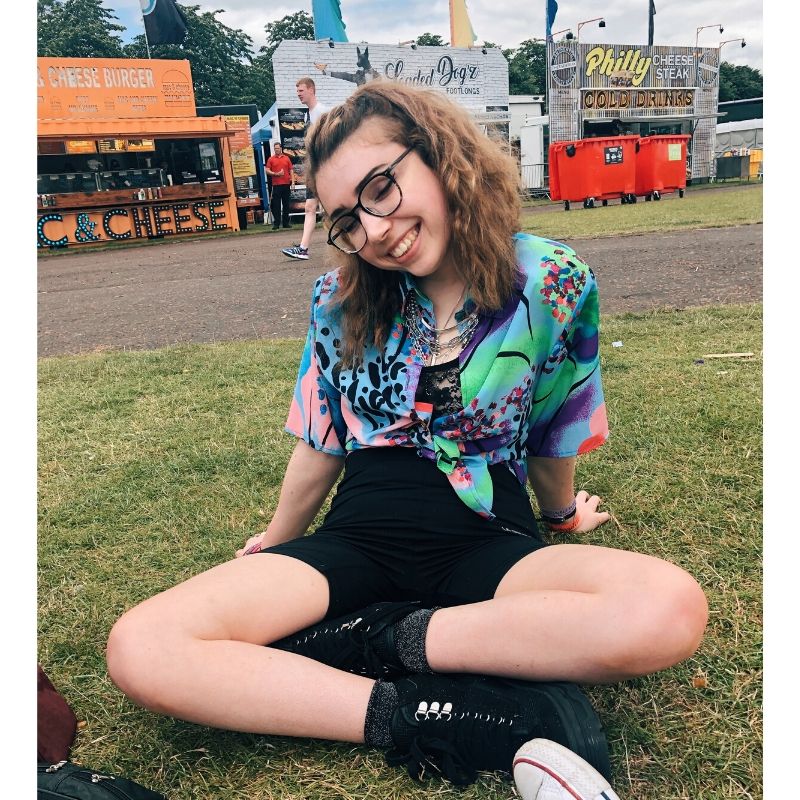
Georgia is sitting on the grass cross legged at a festival. She is wearing a pink,green and vibrant blue shirt with black shorts and boots. She is smiling and her brown shoulder length hair is wavy.

Life as a young person with a disability

By Disability, Real Life Stories

A guest blog by Georgia Hart, a 22 year old from the North of England. ‘When someone asks a disabled person how they are, they want to hear of positive developments, they want to hear how they are overcoming adversity and what they are doing to ‘fight’ their condition. This sounds like a minor misconception, but it is one that has taken a toll on my mental health.’

Read More

From Wheelchair Basketball To Strictly Wheelchair Dancing: Disability Sports In All Forms.

By Disability, Lifestyle No Comments
Photo provided by http://mayallbehappy.org

As a disabled person who is not particularly athletic, the phrase ‘disability sport’ often fills me with a little dread. I am never going to be as incredibly sporty and successful as Hannah Cockroft, the gold-winning wheelchair racer, or swimming’s sweetheart Ellie Simmonds. I used to play wheelchair basketball, and absolutely adored the social side of the sport as well as the opportunity to improve my health and fitness, and realise my truly competitive side! But, there came a time where training did not fit into my working schedule, especially with my travelling commitments as a writer for Lonely Planet. So, I gave it up, watched local tournaments and huge events like the Paralympics completely in awe, but from afar, and decided that maybe disability sport just was not for me…

…How wrong that perception of mine turned out to be! There are so many ways those with disabilities can continue to be conscious of their health, work on self-improvement and have fun along the way without quite the same time and effort it takes to be part of a winning, competitive sporting side. Here are just a few of those ways:

Wheelchair Yoga

Like with most exercise, the benefits of wheelchair yoga really are surprising. As you probably expected, your flexibility is likely to improve and you may well become stronger pretty quickly, but also expect benefits of a better sleep, less stress and anxiety in your everyday life, and a clearer mental connection with what is going on around you. Who wouldn’t want any of these things in our fast and busy lives?

Top Three Wheelchair Yoga Poses

These excellent wheelchair yoga poses will hopefully have you feeling connected and strengthened in no time, each one working a different part of your body. Thanks to www.mayallbehappy.org for their wisdom.

Cat Pose

  1. Grip your chair or place your hands on your thighs
  2. Exhale as you round your upper body forward, dropping your chin toward your chest, arching your spine like a cat
  3. Hold in this position for a few deep breathsCow Pose (front of body-opener)

Eagle Pose

  1. Inhale and lift your arms
  2. Exhale and cross your arms at the elbows so your hands are back-to-back
  3. Hold in this position as you continue to breathe for 20-30 seconds

Hip Stretch

  1. Inhale, lift one leg and cross it over the other
  2. If you want a deeper stretch and you have good trunk stability, exhale and lean forward from your hips
  3. Continue to breathe as you hold the stretch for 3-5 breaths
  4. Gently release your leg and move to stretch the other side

Wheelchair Dancing

For some reason, the thought of dancing in my wheelchair is also something that has made me feel pretty nervous and un-coordinated in the past! But most of us like to get our groove on, right?!

Wheelchair Dancing (especially ballroom dancing) may be right up your street if you have a partner who is either non-disabled or also a wheelchair user. For those of us with disabilities, it can often prove pretty tricky to get active with our partners and find something that we can both do, are good at and will enjoy. Wheelchair dancing can be taken at the couple’s one pace, and there is equal elegance from both sides! It is an opportunity to get physically close, whilst having a giggle and meeting other people in the same, or similar, situations. A good middle ground between an individual and a group sport, and a chilled or exhausting activity, wheelchair dancing might just be the sport for you.

Follow us on Instagram @UndressingDisability and twitter @ETUKUndressing. Or buy our Undressing Disability ebook for £5.99

Top