Tag

dating

The Dating Campaign: disability and accessible apps

By Disability, Sex & disability, Undressing Disability

We asked….and you delivered!

Earlier this year, we asked disabled people to tell us their stories of dating. In particular, around using dating apps as a disabled person. We received so many stories ranging from positive to negative, highlighting everything from app design to education needed, and how to disclose. 


Here are some of the stories we collected during the campaign:

Jo

“I’m going to tell you about a dating experience that I’ve had as someone who is visually impaired. I’ve had a few interesting experiences but a positive one that comes to mind was when I went on a date with a guy to the cinema. 

“At first, he was scared to ask if I wanted to go to the cinema because he didn’t understand why I would want to go to the cinema if I couldn’t see! But I like going to the cinema. He ended up being quite a cheap date because we had to pay for one ticket as we got a carer ticket for free.”

“I would say a lot of my dating stories have been quite similar. As a visually impaired woman, when I tell men that I have a disability their initial reaction is alright, that’s okay or if you need to hold my arm that’s fine. They don’t care so it’s been quite positive.”

John

“I decided early on to disclose my walking impairment on my profile to demonstrate honesty. However, I presented it playfully by saying, “I will still carry the drinks from the bar!” 

I avoided saying the actual medical condition as I did not want my potential match to jump down a Google rabbit hole and make assumptions.”

“When I did not disclose my disability I found when I did, I would be ghosted – which was not fun. I have received strange opening lines and two that will stick with me are “Do your lunges work properly?” and “I bet your disability increases attention.”  

“There is a lot of education and normalising of disability that’s required in this space.”

“One of the most important things to remember when dating with a disability is that dating is a numbers game. The more people you meet, the more likely you are to find someone who is right for you. Don’t be discouraged if you don’t find your soulmate right away. It takes time and effort to find the right person. 

If you keep putting yourself out there, you’re sure to find someone who loves and accepts you for who you are. I know these are words that have been overused but the right person will be able to accept the disability and the person.”

Shreya

“I recently started casually dating again or at least I’m trying to. I did this before I was disabled but not since. I was prepared for some ableism but I wasn’t prepared for the amount of it.”

“I’ve had a lot of the classics: men telling me I’m sexy despite using a wheelchair, or people asking why I use crutches. I don’t use crutches as I use a walking stick. I’ve had people ask me about my medical history within the first five minutes of chatting.”

“I’ve had questions about whether I can have sex even though I am on a sex-orientated dating app. One time someone found out I was a wheelchair user and he made a joke. He said, if we met up and I didn’t know about you being a wheelchair user then I would have made a joke about you being a catfish.”

“From then on, I decided to have one picture with me in my wheelchair and one with my walking stick. I’ve had fewer matches but more intrusive questions. You just can’t win, why is it so hard?”
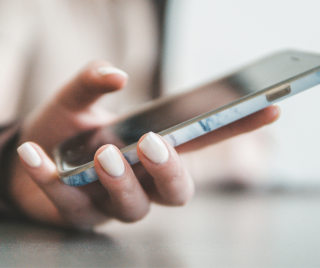
Dating and disability: A person using apps on a phone in one hand

Carrie

“As a neurodivergent person, I often find the apps a bit overwhelming in terms of their layout as it’s unclear what to press or how to tell someone you like them. I’ve sent way more superlikes than I intended as a result of this.”

“It’s hard to know when to tell someone I am neurodivergent as my disability is hidden. On most apps, there isn’t  an option or a space to do this. I tried joining a dating app for disabled people which listed autism but no other neurodivergent condition. I gave up.”

“I did join a dating site for autistic people which had a wonderful option to list your stims. First date nerves are the worst so I like that you can go in knowing that someone knows what your soothing sounds or behaviours are ahead of time. I also loved that you can connect using your common interests too.”

Alex

“This is a little story about one of my recent dating experiences. The person I went on a date with has a brother with a disability. It was easy to connect with them and focus on the date rather than anything else.”

“These topics do come up and sometimes you have to define your disability and walk someone through what you go through daily. Certain things might come up during the chat that make it a bit awkward or a bit draining for us as people with disabilities to talk about.”

“With this person, in particular, we had a lovely conversation which was very entertaining. We had some ice cream and walked around London. It was very cute.”

B

“I openly share that I am a wheelchair user on my dating app profile, usually with a joke, to prevent people from seeing it as a tragedy, but this isn’t always enough. One day, I received a note from a person that said “Everything happens for a reason, right?”. I immediately understood that they were referring to my disability. I accepted their message request and told them I didn’t understand why they would say that and that everything in life seemed very random to me.”

“They replied with a very long message. In summary, they just wanted to say one or two words because I had shared a “special” condition. They kept arguing that life works based on cause-and-effect relationships, that people always use this as an explanation for the things that happen to them, and that if they can be honest with themselves, they can have the right perspective on life.”

“They said that they were thankful that I was hopeful despite everything and assured me that I brought light to their day. Finally, they wished me lots of luck and said goodbye. They seemed very confused about how to see disabled people but I had a chance to explain what was wrong with their approach. In this instance, they reacted with extreme guilt, apologising over and over again. The problem was not my disability but their self-centeredness; and isn’t this always the case?”


WE WANT YOU

We’re encouraging anyone with a story to comment, DM, tweet, or post using the hashtag #AppcessibleDating. We want all stories – positive or negative or both!

We’ll then take the feedback we’ve received to the dating apps themselves with a list of proposed changes and ways they can better support disabled people with their dating lives. 


Follow the Campaign

Follow our campaign by searching the hashtag #AppcessibleDating and join the conversation by connecting with us on Twitter @ETUKUndressing and on Instagram @UndressingDisability

Want to read more? Visit our blog on online dating as a disabled person

Navigating Religious Virginity and Dating

By The Love Lounge questions

The Question

I’m in my late 40’s, and now live with my mum as her carer. I received a diagnosis of Social Anxiety. Although I have had some male friends, I have not yet entered into a relationship with anyone. My faith encourages marriage without sex before marriage, and I abstain from drinking. I am still a virgin(!).  After a few years of not thinking a relationship is possible, I’d like to give it a go now, and hope I can learn and grow from the experience.

I’m really stuck though on how to go about it. During lockdown, I tried online dating and met a wonderful guy. However, we faced the challenges of long distance relationships, and he was also dealing with his own mental health issues. I realised I couldn’t sustain a relationship with them, and look after my mum at the same time. One problem right now seems to be that I look a lot younger than my age and am immature for my age (probably lack of relationship experience etc.) As a result, I tend to connect/chat better with men who are at least 10 years younger.  When they realise my age, and that I’m a virgin, it’s all a bit much and they run!

Any thoughts, suggestions and signposting you’d have would be great.  I think I need help in navigating all this!

Sandi


The Answer

Reading your email, I feel quite positive. There’s no reason to think otherwise! I understand that you may not feel that though.  However, I think the main thing here is persistence and widening your search!

With online dating you need to sift through a lot of profiles to find a good one! So don’t put all your eggs in one basket basically. It’s best to get talking to a number of people at the same time and see which develops best. That would prevent you getting into a situation like the one you said about, where you’ve invested a lot in the relationship and then realise you can’t sustain it.

Now, naturally, everyone gets into a relationship and thinks it could be going well and then it doesn’t.  That’s just natural. So this is where persistence is key! Just keep on trying, get back online and find more people!! It does take energy and time… but lots of people manage it! (I end up getting bored!).

With your cultural/religious beliefs, you may want to state that on your profile so that you attract like-minded people (in regard to no sex before marriage). Or find websites that have that (e.g. NOT Tinder!!).

Regarding your age and looking young – lucky you! There are plenty of men who want an older woman so again just keep looking.  Many prefer it as there isn’t the pressure for children etc. or they just don’t click with women of their age.

Can you meet other people in your religious community, so you come from the same understanding?  Or if you can date/marry those who practice other religions, and the sex before marriage bit is the important part then that gives you more scope to look on more specific dating apps.  Also, an important part to consider, is what does ‘no sex’ mean for you? Is that just penetration? Could you do everything else other than that? You need to define your own boundaries as plenty of men would be happy to have a relationship with that level of intimacy, regardless of their beliefs.

I wish you luck and you’ve taken the most important step with being ready to give it all a go!

Best wishes,

Zoe

The Love Lounge Team


Contact Us

Everyone who writes into our Love Lounge receives an email with a private answer to their question. We then anonymise the Q&A and share them here on our website to help others who may be struggling with the same concern.  Get in touch if you’d like some advice.

Keep up to date with all our Love Lounge articles by following us on Instagram @UndressingDisability or on twitter @ETUKUndressing.

#UndressingDisability #LoveLounge

Next question

Alex Vasquez: Advocate for Disability and Sexuality Rights

By Sex & disability, Undressing Disability

Meet Alex Vasquez (@TheWheelsBlog)

Alex Vasquez is a 27 year old digital content creator and communicator known as TheWheelsBlog online. He is an advocate for disability and sexuality rights and uses his platforms to make a difference. Alex is originally from Costa Rica but moved across to London in 2021 to study abroad. He has a love for travelling and witnessing how people with disabilities live in their own corners of the world.

Tell us more about your advocacy work. What is it all about and what made you want to start advocating in the first place?

I focus specifically on the intersection of sexuality and people with disabilities. I came out as a queer person back in 2011, when I was only 15 years old. That was when I first realised that I combined in my identities, two very different communities that were not exactly contributing to the acceptance of the other. In reality, in most of the places I have visited, the discrimination against one another is persistent. Non-disabled queer people don’t usually accept those with disabilities and even build spaces for sexual exploration that aren’t disability friendly. And straight cisgender disabled people usually discriminate a lot against sexual diversity. Through this first understanding, I identified the gap of representation of people who could identify with more than 2 communities. People who are intersections, bridges, and hubs. Now I run a online blog (@TheWheelsBlog) on TikTok where I try to evidence this intersection through the themes of access, travel, and so much more.

What was it like to grow up gay and disabled in Costa Rica?

It was complicated. On the positive end, I grew up in a very loving and accepting family, which is rare for a Latin American country. So I was able to always prioritise my own identity and authenticity before anything else. However, it was also very challenging as I grew older and didn’t get the equal opportunities of exploration that my age peers were having. For example, I hung out with my friends even in my undergrad years in the same spaces as in high school: the movie theatre, the shopping mall, and local cafés. I wasn’t able to go to bars as often as I wanted because most of them were not wheelchair friendly. And even when I did attend those spaces, the reality always hit me that people access was not yet there. Other gay men would treat me as a child and not consider me an option.

How did your experience of being gay and disabled change when you moved to London?

I think I can best summarise this (as it is many things all at once) by stating that London helped me put the logistics of my life to a secondary level of priority. All of sudden, the NHS would cover all the medications I needed for my diabetes. Transport would be free as a wheelchair user. I could attend a wheelchair friendly gym. Most bars and pubs were adapted. My independence grew exponentially as I started living on my own. And with this, my main investment came to be my own self and growing as an adult which I needed in order to start also exploring my sexuality and my interactions with any human in general.

Let’s talk about dating, have you noticed anything different about the dating scene in London as a gay and disabled person, compared to back home in Costa Rica?

The changes are not major I will say. There is still much isolation for people with disabilities in their sexual lives. The infantilisation is still here and hasn’t changed much. But I will say that I can perceive an overall increase in how people are more receptive to learning about disability and applying that to their dating lives. This is probably due to the diversity hub that London captures from so many walks of life and places in the world. I do feel more accepted and understood. And there are certainly services and programs dedicated to raising awareness to this. I don’t feel as alone here. And the dating apps have sometime even worked! This was not the case back home.

Travel seems to be a big part of your life, do you encounter any notable differences travelling between countries, not just as a gay man but also as a disabled person?

Yes!!! Being a disabled tourist in the UK and in Europe is so much easier. There are trains and commuting systems already made accessible for you. Hotels and other staying venues have already experienced hosting people with disabilities before. Travelling is still much more expensive for us here. Hotels are very expensive when getting a disability room, but I am very happy that I can make these travelling projects with more places in mind and activities to do than back in Costa Rica, where the United States and Canada would be my options if I wanted certainty that these would be disability friendly destinations. I even found a wheelchair friendly beach in Barcelona, one of my favourite cities so far, I had such a beautiful short time there. I felt seen.

What would you say is the best approach to inclusion and support for disabled people? What are your thoughts on a one size fits all approach?

I believe we need to start thinking of inclusion in a case by case basis. I understand why an initial solution to an issue would necessarily be a standard measure, but systems need to become more flexible in researching for different cases and their circumstances. Sometimes, we will know what is best for us, so listen to us. Sometimes we won’t and we will all need to do some research together. As long as authorities continue to be trained on disability, which I think the most important part of understanding disability is exactly that: listening.

Real access doesn’t come with lifts, wheelchair friendly tube stations, or screen reading software. Real access is when you are able to connect with other humans who do not understand you, but who are willing to learn from your disability and your needs. Who are willing to be your employer, your teacher, your peer, your bestie, and even your lover.

Each disability has its own challenges. Let’s embrace that.


Join our Undressing Disability Hub here

Top