Tag

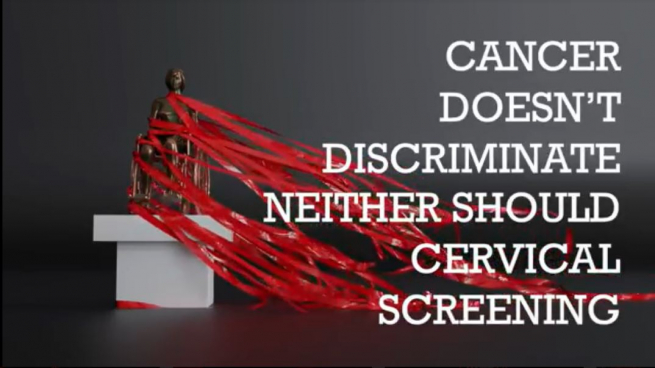
#CervicalScreeningRedTape

Researchers aim to improve access to cervical cancer screening for physically disabled people

By Disability, Sex & disability, Undressing Disability

Researchers aim to improve access to cervical cancer screening for physically disabled people


A team of researchers at Keele University that includes psychologists, GPs and nurses, are leading an innovative new study which aims to help physically disabled women better access smear tests. It is hoped that this will reduce cervical cancer rates.

The testing, which is also known as a smear test, can be really difficult for many people. It can be physically challenging for many people with a cervix and sometimes impossible. Not only that but misconceptions about disabled people can make access even harder.

Cervical cancer testing rates

There are more than 7 million disabled people in the UK who may be likely to have a higher risk of delayed diagnosis and dying from cancer due to lower screening uptake.

Removing these barriers could help ensure equal access to cervical cancer prevention. It could also mean early detection of cervical cell changes therefore reducing the number of deaths from cancer.

The study has been funded by the National Institute for Health and Care Research (NIHR). It is being conducted in collaboration with Jo’s Cervical Cancer Trust and patient representatives. The study will involve interviews and surveys with people who have physical disabilities or conditions that make cervical screenings challenging. The team will also interview GPs, nurses and reception staff to gain an understanding of the barriers posed by the process which will help to highlight solutions.

“We are very grateful to have received funding for such an important and largely overlooked issue and we look forward to working with stakeholders to improve the cervical screening experience for physically disabled women and people with a cervix, said Lead researcher Dr Sue Sherman, from Keele University’s School of Psychology.

“Everyone who is eligible for cervical screening should be able to access the test. Too often we hear from women who are unable to attend as a result of a disability or long-term condition, and this should not be the case. We’re thrilled to be teaming up with Keele University to help identify and address some of the barriers and stigmas that exist and ensure more women can reduce their risk of cervical cancer,” added Samantha Dixon, Chief Executive of Jo’s Cervical Cancer Trust.

Cervical cancer is caused by a virus called human papillomavirus (HPV) that causes changes to cells in the cervix. If this is left untreated, the HPV infection may turn into cervical cancer. Smear tests can help to determine treatment before cells turn cancerous if HPV is detected.

How to get involved with the cervical cancer study

Do you have a physical disability/ impairment or long-term physical condition? Does this mean that cervical screening is hard or impossible for you to take part in?

Would you like to join our project group? What does this involve?

  • This is a virtual study and will involve you attending a few online meetings throughout the project:
  • You will be reimbursed for your time.
  • The project is expected to last 2.5 years

If you are interested take in the road, please complete the following form/ scan QR code:

https://forms.office.com/e/bVJAmWveyb

Or

For further information an expression of interest, please e-mail doctor Emma Kemp (e.j.kemp@keele.ac.uk)


Read more on cervical cancer and Deaf awareness
Cervical Screening and Deaf Awareness

By Disability, Undressing Disability

Cervical screening saves lives and its so important that women have regular check-ups. So why did a survey by Jo’s Cervical Cancer Trust highlight that 88% of disabled women found accessing a smear test more difficult because of their impairment? Claire, our Deputy CEO shares her experience of cervical screening as a deaf woman.

6 Monthly Check Ups

A few years ago, I had to go for cervical screening tests every 6 months. It definitely wasn’t my favourite way to pass the time, but I know first-hand how essential it is. You see a smear test showed that I had moderate to severe abnormal cells caused by the HPV virus. Luckily for me it was picked up and I had laser therapy to destroy the abnormal cells. Now that’s resolved I go for a smear test every 3 years and hope for a positive experience. Unfortunately, a lack of deaf awareness frequently creates problems. As a result, I battle with feelings of anxiety before, during and after the test takes place. And I’m not alone. A study by Jo’s Cervical Cancer Trust found that 88% of disabled women found cervical screening tests difficult because of their impairments. Something needs to change!

My First Smear Test

The first time I had a smear test I didn’t really understand what was going on. I’m sure that’s common for many women but when you’re deaf there’s extra things to feel anxious about. For example, at my doctor’s surgery the examination room is right next to the busy waiting room. Before my smear test the nurse left the room for me to get undressed. She said she’d knock to make sure I was behind the cubicle curtain before coming back in. As I can’t hear the knock on the door, I felt panicked that I’d be exposed.

I explained that I was deaf, but unfortunately the nurse didn’t adapt her behaviour to ensure I was properly briefed. When preparing for the test she kept turning her head away to organise the equipment. This made it impossible to lipread, so I lay there with my anxiety growing by the second.

Once my knees were up and a sheet covering me, I couldn’t see what was about to happen. I knew she was talking to me, but I couldn’t hear what she was saying. I said “I can’t hear you” and instead of moving her head so I could lipread, she just stopped talking.

When she inserted the speculum there was no warning, so I tensed my body, and it was really painful. (I’m told by hearing friends that the nurse tells you when it’s about to be inserted and whilst it may be uncomfortable it usually doesn’t hurt.)

I also left the test with no idea of when to expect the results and went home upset and worried.

Deaf Awareness

My next experience of cervical screening was much more positive. The nurse told me her cousin was deaf, so she had great deaf awareness. Here’s what she did to make the smear test a much easier experience for me.

1. She explained the procedure from start to finish before asking me to get ready and lie on the bed.
2. Whilst explaining she maintained eye contact, used gestures, and demonstrated with the speculum what would happen. When I didn’t understand one part, she got a pen and paper and wrote it down.
3. When leaving the room for me to get undressed she said she’d be back in 5 minutes, rather than saying ‘she’d knock’. I looked at the time on my phone, got ready and waited.
4. We agreed that she would tap my leg as a sign that she was about to insert the speculum, giving me a moment to relax and prepare.
5. She understood that I was very anxious because of my previous experience and reassured me.

Make Appointments, Not Assumptions

If you are deaf and have never had a smear test, then please don’t be put off by my initial experience. Cervical Screening saves lives. My aim of sharing such a personal insight is that it will help bring about change, and help the disabled community have equal access to the services others access easily.

For medical professionals reading this hopefully my tips will be useful and improve deaf awareness within your surgery or clinic. Find more insight on our campaign page. 
#CervicalScreeningRedTape

Follow Our Campaign

Read more about our #CervicalScreeningRedTape campaign and follow us on twitter @ETUKUndressing and Instagram @UndressingDisability.


Worried about Cervical Screening?

Visit the Jo’s Cervical Cancer Trust website where you’ll find lots of practical information, advice and a forum where you can pose questions and share experiences.

#CervicalScreeningRedTape campaign

By Disability, Undressing Disability

Our #CervicalScreeningRedTape campaign aims to highlight the fact that many disabled women are finding it difficult to access cervical screening.

The Issues

Common barriers to accessing cervical screening are:

  • Disabled women not being offered a smear test as it is often assumed that they are not sexually active and are less likely to need a test.
  • Physical barriers such as a lack of non-adjustable beds in GP surgeries.
  • Fear. Due to a previously negative experience. Or a self-consciousness as their body may differ to what they believe medical staff are used to seeing.
  • Expense. Often disabled women have to travel further than their local surgery to attend an accessible clinic.

Potential Solutions

What can be done to improve access to smear tests for disabled women? Below are four potential solutions.

  1. Recognise that disabled adults can enjoy an active sex life and offer as standard cervical screening and sexual health tests.
  2. Ask what an individual’s needs are. If your surgery does not have accessible facilities that meet the needs of a disabled patient, then have a procedure in place where you can offer an alternative location. This saves both you and the disabled woman a lot of time and effort phoning around. Read Emily’s blog for a real-life example. 
  3. Realise that standard procedures won’t work for everyone. For example, due to physicality it may be easier for a woman to have a smear lying on her side rather than on her back. We are all different, and often know our bodies well. So if it’s feasible to do things differently, be willing to give it a try.
  4. Most women are apprehensive about having a smear test but for many disabled women there is an extra layer of nervousness. Reassurance prior to the test being booked can help alleviate this fear.

We fully appreciate the challenges our NHS is facing during the pandemic and know that wait times may be longer than usual, however we hope our solutions can become best practice.

Useful Resources

Undressing Disability Podcast

Dr Larisa Corda OBGYN and presenter Sam Renke are guests on Episode 2 of our Undressing Disability podcast. Joined by our CEO Jennie Williams they share personal experiences of the issues around accessing cervical screening raised in this #CervicalScreeningRedTape campaign.


Blog

Emily wrote about her experience as a wheelchair user of trying to access her first ever smear test in this blog article.

The Undressing Disability Hub

Last year we launched our Undressing Disability Hub which is free to join. It is full of free resources on topics relating to sex and disability. Members include professionals working in the fields of medicine, psychology, and care homes. As well as sex educators and those searching for a safe network to learn and share information on the topic of sex and disability.

Sign up for free today.

Worried about Cervical Screening?

Jo’s Cervical Cancer Trust is a charity which provides information and support on the topic of cervical cancer. Their website https://www.jostrust.org.uk/ is full of valuable insight and they do an incredible job raising awareness and saving lives with their work.

#CervicalScreeningRedTape 

Stay Up To Date

Follow our campaign on social media on twitter @ETUKUndressing and Instagram @UndressingDisability. #CervicalScreeningRedTape


Top