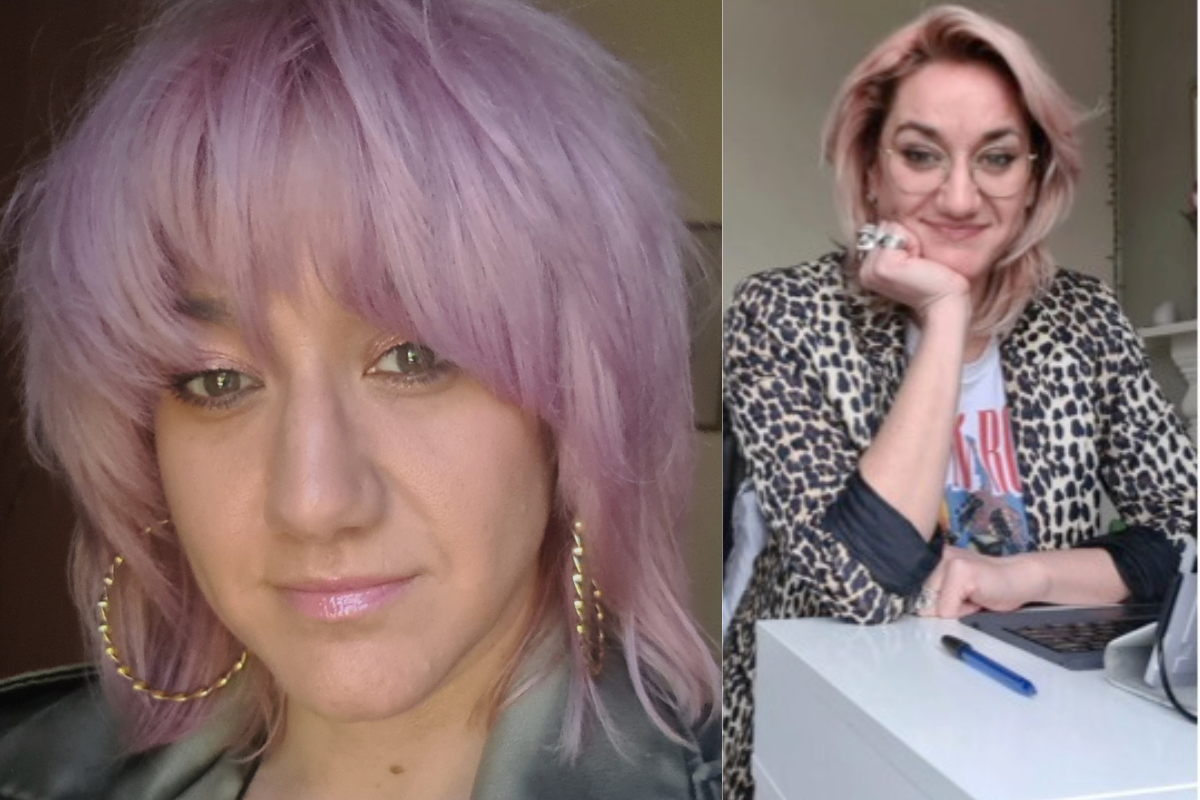
Amy Butterworth is a Long COVID activist, coach and talented writer. She is a powerful advocate for people living with Long Covid (LC), and her Instagram is a valuable source of inspiring tips and advice on managing the condition.
She shares what life was like for her before LC and what quick wins we can implement to support others.
What was life like for you pre-COVID?
I was managing a team at the Scouts, designing the programme of badges and activities, ensuring they were inclusive and accessible and preparing our young people for the changing world. I loved travelling the country and meeting groups to understand what they wanted from the programme, and how inclusive co-designing can create that.
Just before I got sick, I launched the Money Skills Activity Badge for Beavers and Cubs, which I was hugely proud of. I made sure we were co-designing with leaders and young people with different cultural, religious and neurodivergent backgrounds, specifically dyscalculia. Outside of work, I would set myself a physical challenge every year (triathlon, half marathon, boxing match), I loved going to gigs, theatre and comedy, and generally being the one you could call on to pick you up from the airport or watch your kids.
When did you contract COVID, and what has it meant for you since then?
I got it in July 2021, and it changed everything. It was like a very exhausting flu, but after the cough went away and my sense of smell returned (ugh, that was the weirdest part), the fatigue persisted. I felt very weak, exhausted by walking, and my breath felt like hard work. My workplace was kind and patient, but I couldn’t return – I couldn’t guarantee that I could be a reliable colleague, so we had to terminate my contract.
I had to focus on my recovery and, after another year, I realised that this wasn’t recovery, it’s just how my body is now. That acceptance helped to change my attitude. I’m not ‘trying to get better’, I’m accepting this as my best, and let’s start here.
I started sharing my mindset and practical tips on Instagram in March 2024, as @longcovidrockstar, and it has really helped me make something of this experience. I’m still on the sofa 70% of the time, but now I feel a part of something, and that’s huge.
You can follow Amy at her Instagram page, LongCovidRockstar
What are some of the biggest misconceptions people have about Long Covid?
Many people just don’t understand it, and it speaks to a lot of systems that we have been living in: that fatigue is just laziness, and we’re not trying hard enough (capitalism), that it’s probably not as bad as you think (misogyny), or that we are choosing to live like this (ableism). We struggle with the concept of ‘chronic’ conditions because that narrative is ‘you get sick, then you get better’, but these illnesses are lifelong, and it can be scary to see people like me get disabled who were previously very healthy. We represent the fallibility and randomness of the body.
Long COVID has a few cousins (ME, MS, CFS, etc), and it is experienced differently by everyone. 200+ symptoms, 65 million people worldwide, it’s been hard to find a correlation in such a recent illness. Some people recover, others are bedbound, some push through, and everything in between. So that inconsistency makes it hard to understand and, honestly, develop sympathy for people with it.
What has been the biggest adjustment for you?
Not knowing that I can always rely on my body. The humility that limited energy brings. I walk with a stick now. I use a wheelchair on outings. I can work for 2 hours a week. I cancel plans frequently because I don’t have the energy. I have learned how to give myself grace for all of these – I used to see them as failures, now they are simply how I live, no judgement.
Learning to accept my vulnerability and ask for (and accept) help. I was so proud of my independence, and this has shown me how much I need my support network – and that it was there all along. There has been some profound heartbreak of some people not staying with me on this journey, and the overwhelming love and understanding I have received from my family and friends who have stuck by me has helped me adjust to this new way of living (and loving). I am very aware that not everyone has this – even just being believed is a really big thing for people with ‘invisible’ illnesses – and so I try to share the love where I can.
Giving myself the grace to rest, the kindness and patience I speak to myself with now are very different. Like many others, I would assign my value to how much I could do/produce/achieve in each day, that ‘stress meant that I cared enough’, that burnout meant I had worked ‘hard enough’.
I’ve been reading a lot about activist history, and that Audre Lorde line is a foundational tenet now: “Caring for myself is not self-indulgence, it is self-preservation, and that is an act of political warfare.” Do not underestimate just how political it is to claim ownership over your own body, especially a female one, or a queer one, a trans one, or a disabled on, or a Black or Brown one – capitalism forces us to ignore our bodies, and when we rest we are protesting that. We put ourselves first, we deserve it, my one wild and precious life will not be focused entirely on punishing myself, my self, or my body, for your standards.
You are so open on social media about what your life is like with LC. Have you found community online, or how has it been to be so open?
I am very careful about what I choose to share and what I’m ready to talk about, and that will continue to change. I am lucky enough to be working with a great therapist, and through our conversations, I’m learning how to give language to what I’m going through, which I pass on to others in case it’s helpful. I’m also careful about not using social media to heal a wound – that is my job, not the function of likes, or seeking validation in the comments. Maddy Alexander-Grout says, ‘show the scar, not the wound’, so as I heal, I feel more ready to share. My background is in comedy, so it’s been really fun tapping into that and making sketches again (I speak to myself as ‘Ego’ and ‘Grace’ about different aspects of long covid, and they are surprisingly filthy and self-righteous, I really enjoy that). I think my honesty about how hard living with long covid is helps people feel seen, and my practical tips on how to ‘still’ do things help people feel empowered to do things, carefully.
The community have been amazing, I’ve been so lucky in who continues to show up, and it feels like a very kind and powerful corner of the internet. They’re all on the sofa as well, and just as funny and creative and brave and mouthy and kind, but their frustration is how to ‘still’ be everything that they are, even with long covid. I’m trying to show them that this is still possible. For example, I am still a big rock music fan, but I can’t get out to gigs as much, so I’m on the sofa in leather trousers.
What quick wins could people put in place to make things (could be workplace or social spaces) more accessible for people with LC?
The quick wins can be “imagine attending this event when you’ve not slept for 3 days, and you have a hangover, and you’ve broken your leg so you’re on crutches”. This will put you in the mind of someone’s exhaustion, nerves about events and their physical mobility:
- Images/videos of the venue so they can imagine themselves there
- Free companion ticket
- Physically accessible space. If it isn’t, then acknowledge this, and ask what access needs might help (e.g. “our front door isn’t accessible for wheelchairs, but we can ensure you a seat in a prime location for the event” or something.)
- Ask what time of day their energy is best suited to the meeting/conversation
- Recognise that they will be resting before and after the event, sometimes for days, so if you need a follow-up, be prepared for that.
You can find Amy on her Instagram page at LongCovidRockstar